Heritage quarter · สัมพันธวงศ์
Talad Noiตลาดน้อย
The oldest edge of Chinese Bangkok — shrines, engine parts and one Hokkien mansion.
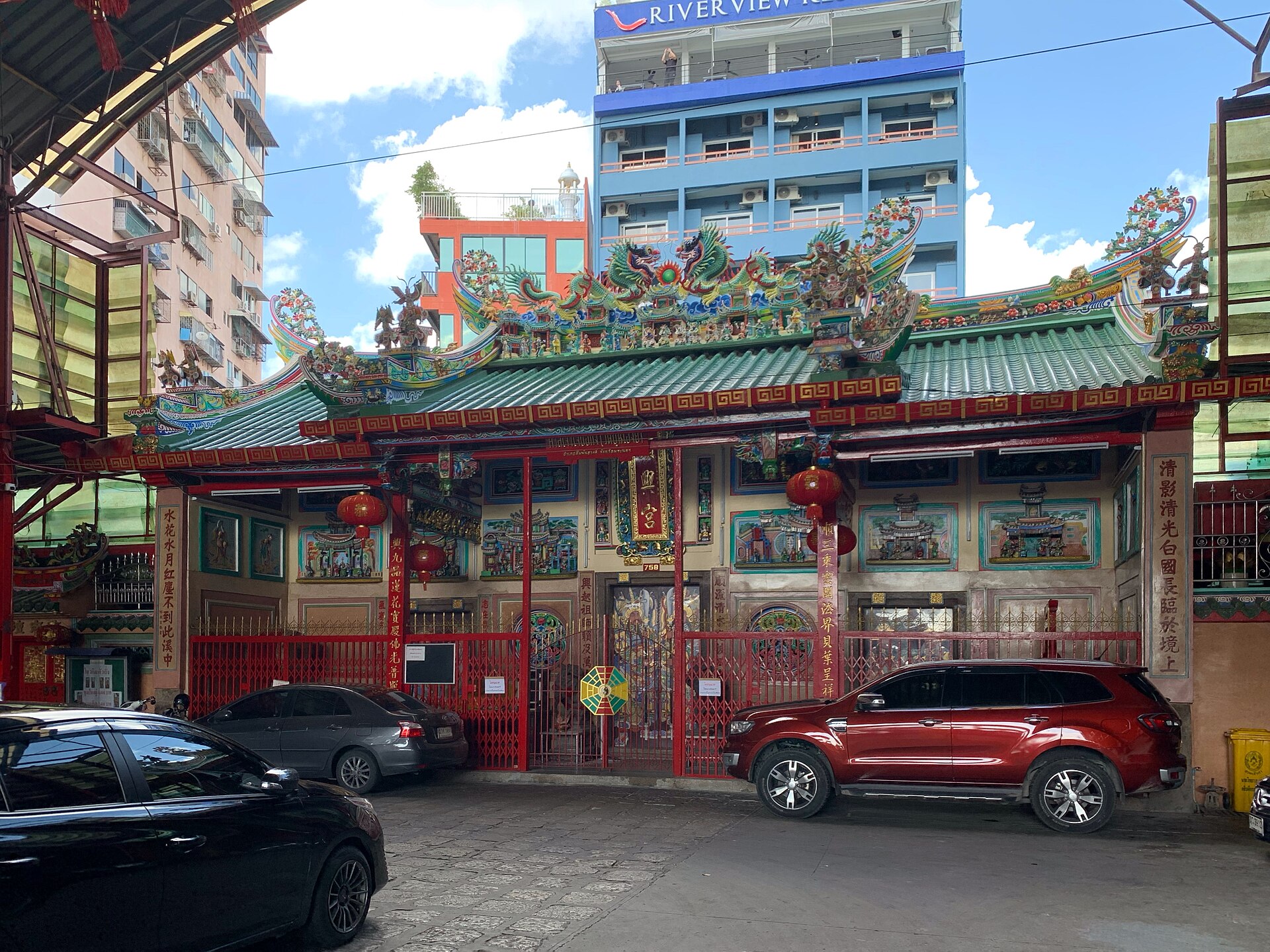
Talad Noi — 'the little market' — is where Chinese Bangkok frays into the river south of Sampheng. Hokkien families settled here in the first years of the city, earlier than the Teochew waves that filled Yaowarat, and the quarter still runs at their scale: lanes a hand-cart wide, shrine smoke, and forty years of motor-oil black soaked into the concrete of the used-engine-parts trade that took over the godowns after the Second World War.
The San Chao Chow Sue Kong shrine, founded 1804, is among the oldest Hokkien shrines in the country and still runs a vegetarian festival that fills the quarter every ninth lunar month. So Heng Tai, a four-wing Fujian courtyard mansion from the 1790s, survives as the home of the same family eight generations on — its courtyard now, improbably, holds a freediving pool. On the riverfront, the restored godown compound of Hong Sieng Kong stacks Chinese roof tiles over espresso machines, which is the quarter's whole trajectory in one image.
At the southern corner stands Holy Rosary Church — Wat Kalawar, from the Portuguese Calvário — on land granted to Portuguese Catholics in 1787; the present Gothic Revival building went up in the 1890s. A block north, the Fine Arts register lists the Beaux-Arts head office Siam Commercial Bank finished in 1910 — Thailand's first commercial bank, still operating that branch behind the original brass grilles.