BKKxC(ulture)

Heritage quarter · สัมพันธวงศ์

Yaowarat & Samphengเยาวราช–สำเพ็ง

Chinatown proper — 1782 lane, 1890s boulevard, five and a half tonnes of gold.
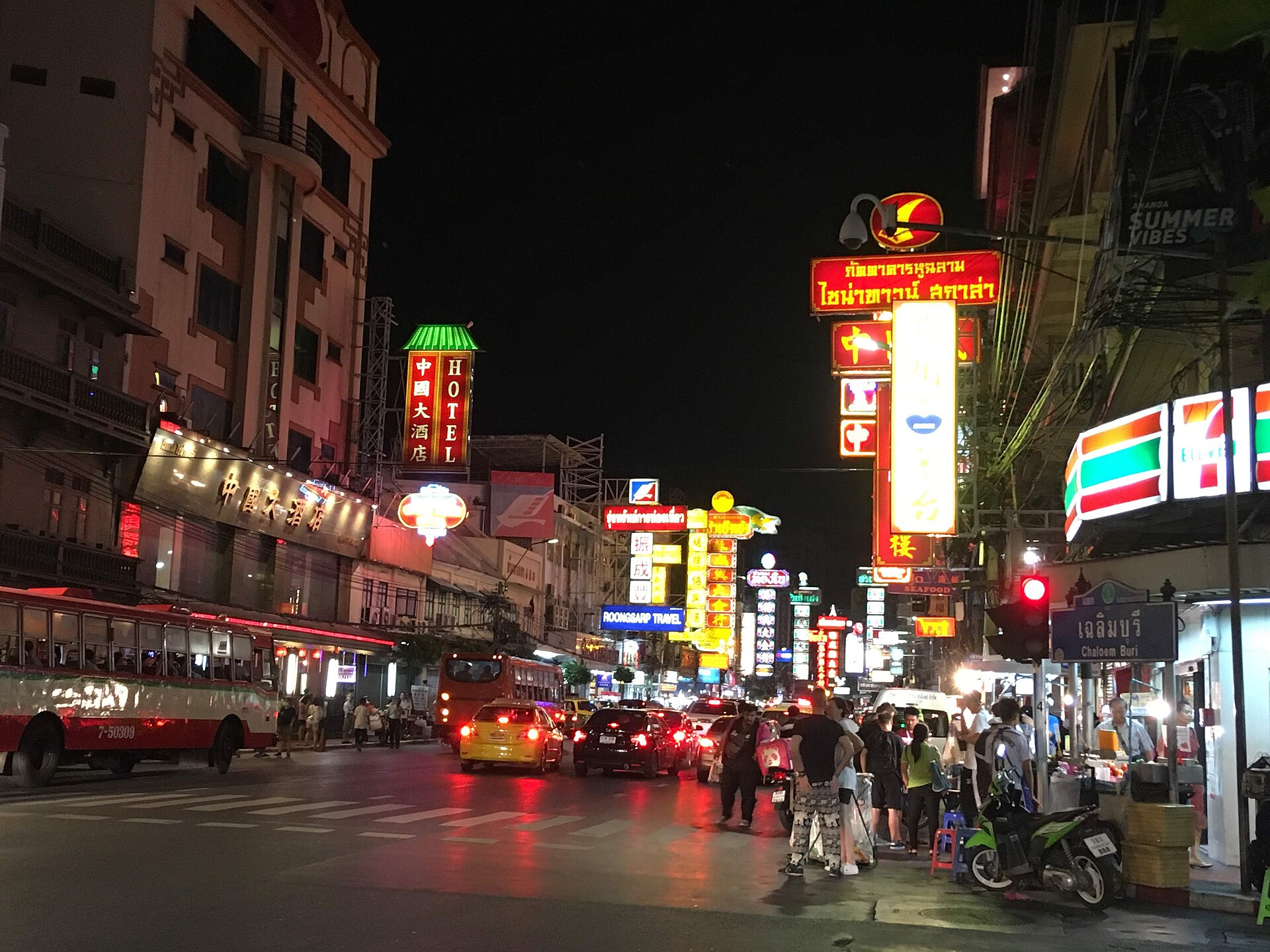
Yaowarat & Sampheng — Chinatown proper — 1782 lane, 1890s boulevard, five and a half tonnes of gold.
Yaowarat & Sampheng. Photo: Christophe95 · Wikimedia Commons · CC BY-SA 4.0.

When Rama I took the land under today's Grand Palace for his capital in 1782, the Chinese traders already living there were moved downriver to Sampheng. The lane they built — now Soi Wanit 1 — still runs its original course, a covered kilometre of fabric, buttons and gold shops barely two metres wide. Yaowarat Road, the dragon-curved boulevard the neon knows, came a century later, cut between 1891 and 1900 as Chinese Bangkok's front street.

Wat Traimit, at the quarter's eastern gate, holds the Golden Buddha: five and a half tonnes of solid Sukhothai-era gold that spent two centuries disguised under stucco — the plaster cracked during a move in 1955 and the gold looked out. Wat Mangkon Kamalawat (1871), the largest Chinese temple in the city, anchors the Teochew religious calendar; during the vegetarian festival the whole of Yaowarat goes yellow-flagged and meatless. The Odeon Gate, raised in 1999 for the King's sixth-cycle birthday, closes the boulevard's eastern end like a punctuation mark.

The register's entries here are mostly not temples but shophouse runs — Sampheng lane itself, Ratchawong, Song Wat, Yaowarat — protecting the fabric of the trade rather than any single building, which is the honest way to protect a market quarter.

Register monuments of the quarter — filled marks are gazetted, hollow marks await consideration. Positions from the Fine Arts Department register, relocated where needed as documented on the register page.

In the Fine Arts register

  • วัดไตรมิตรวิทยารามgazetted
  • วัดมังกรกมลาวาสawaiting consideration
  • ตึกแถวถนนวานิช 1 (สำเพ็งหรือสามเพ็ง)awaiting consideration
  • ตึกแถวถนนราชวงศ์awaiting consideration

Walks through this quarter

Side quests near here

Real, currently-open spots — not a top-10 list. Verified before publishing; still worth calling ahead.

Eat

  • Nai Ek Roll Noodleก๋วยจั๊บนายเอ็ก

    Guay jub with crispy pork belly and offal, running since the 1960s and a Michelin Bib Gourmand since 2018. The peppery broth is the whole point — don't order it mild.

    Where: 442 Yaowarat Road, next to Soi 9 · Open in Maps

Sit still

  • Leng Buai Ia Shrineศาลเจ้าเล่งบัวเอี๊ยะ

    The oldest Chinese shrine in Thailand, older than Bangkok itself. Tucked in a courtyard off a side soi — empty and quiet outside festival days, unlike the tour-bus crowds at Wat Traimit.

    Where: Off Yaowarat Soi 6, inside Talat Kao · Open in Maps

Explore

  • Talat Kao (Old Market)ตลาดเก่า ซอยอิสรานุภาพ

    A 200-year-old wet market running fresh meat, fish, and Chinese herbs since before Yaowarat Road existed. Grittier and more local than the fabric-and-button stalls. Shut by lunch, so go early.

    Where: Soi Issaranuphap, Yaowarat · Open in Maps

Make something

  • Clay Circle BKKเคลย์ เซอร์เคิล บีเคเค

    Wheel-throwing and hand-building pottery classes a few minutes from MRT Sam Yan — not in Chinatown proper, but close enough to fold into the same afternoon.

    Where: Soi Chula 7, Wang Mai, Pathum Wan · Open in Maps

Talk to someone

  • Tang To Kang Gold Shopห้างทองตั้งโต๊ะกัง

    Founded 1875 by a goldsmith from Fujian, still run by the same family five generations on. The only gold shop in Thailand granted the royal Garuda emblem — the family runs a small museum and talks history with anyone who asks.

    Where: Soi Wanit 1, Yaowarat/Sampheng · Open in Maps