Heritage quarter · สัมพันธวงศ์
Song Watทรงวาด
The road the King drew — godowns and rice-trade shophouses on the river's edge.
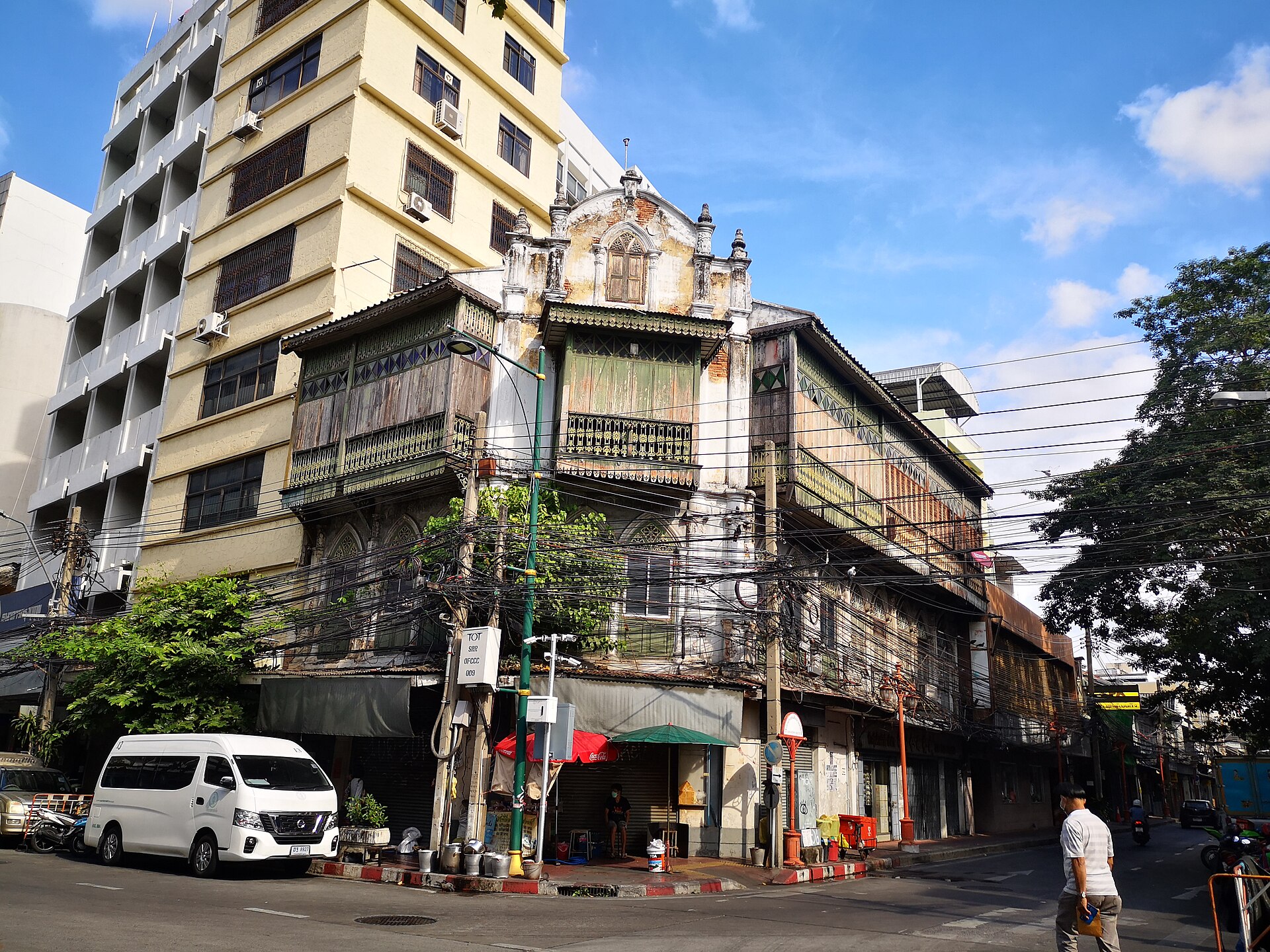
Song Wat means 'drawn by the King' — Rama V sketched the line of this road himself in the 1890s, cutting a fire-break and a cart route between Sampheng's crowded lane and the river. It became the wholesale artery of Chinese Bangkok: rice, dried goods, spices and hardware moving between the godowns on the water side and the shophouses on the land side. The register protects the whole shophouse run (ตึกแถวริมถนนทรงวาด) as a single monument.
The trade never left — sacks of dried chillies and jasmine rice still come off hand-carts here at dawn — but the last decade layered a second economy over it: galleries, roasters and restaurants moving into godowns whose owners refused for a century to modernise them, which is precisely why they were worth moving into. The 1920 Poey Eng school building, founded by the Teochew community and fronted like a small Chinese civic palace, and the Lao Pun Tao Kong shrine, the Teochew ancestral shrine of the quarter, mark the community that built it all.
Walk it on a weekday morning if you want the trade; on a weekend afternoon if you want the galleries. The two economies use the same doorways at different hours.