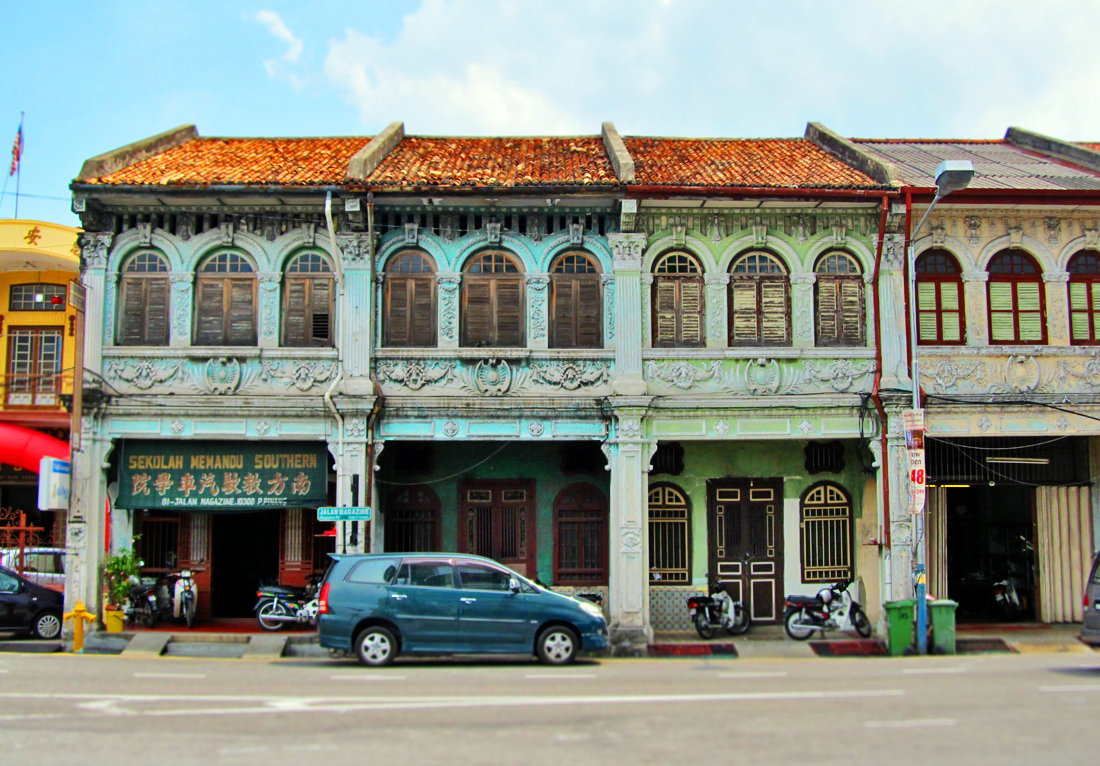
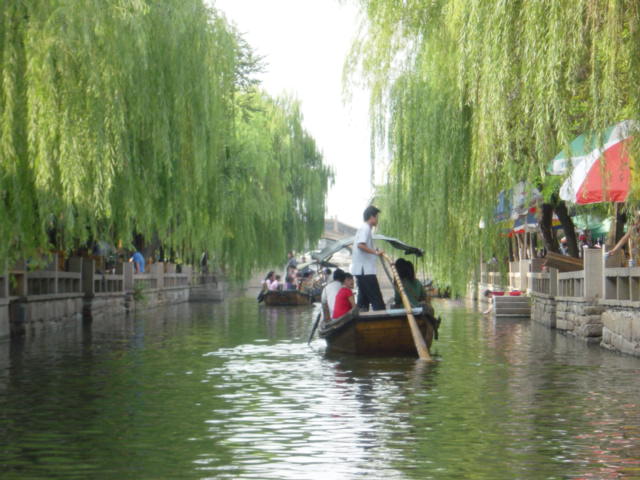
8 UNESCO World Heritage towns among the 19 profiled, 5 Chinese origin ports and the 9 dated vectors between them — with a verdict on every one.
The Bangkok shophouse is a regional instance of a Maritime Silk Road typology. The other instances have been studied for longer, more deeply, and in more cases of overtourism. This page is the map and the verdict the next essay will need.
Coordinates cross-checked against UNESCO listing data and the GeoNames database. Social-impact verdicts cite peer-reviewed work where it exists; the “research-stage” label is honest about where it does not. Photos are Wikimedia Commons (CC BY / BY-SA) and are linked, not hosted, so the file is yours to re-use.
The numbers at a glance
19towns profiled
8UNESCO World Heritage
9national register
10countries
5Chinese origin ports
9dated migration vectors
4overtouristed
8gentrified
The map
Equirectangular projection, southern China and the South China Sea to the Indonesian archipelago. The square markers are origin ports in Fujian and Guangdong — the actual coastal cities the diaspora left from. The round markers are the receiving towns, colour-coded by protection tier. The dashed arcs are the dated migration vectors, each one a real community's century of movement.
Hover a town to see its verdict, period and community. Square markers are Chinese origin ports; round markers are overseas shophouse towns. Dashed arcs are dated migration vectors.
The Shophouse Health Index
A ranking, not a verdict. Every curated town is scored on five metrics — authenticity, resident continuity, commercial vitality, renovation restraint, adaptive-reuse wisdom — each from 1 to 5. The composite is the simple mean. Click Pin on any two towns to compare them side by side; the Bangkok baseline is pre-pinned against Singapore.
Where Singapore is. Composite 1.4 — tied with Lijiang Old Town and Zhouzhuang, above only Shanghai. What makes Singapore the cautionary case is not its rank but how it was reached — deliberately. The HDB-style shophouse revival with a lifestyle economy on top of it is what the Bangkok Sukhumvit 71 corridor should not end up as.
#
Town
1–5
1–5
1–5
1–5
1–5
Verdict
1
Hongjiang Ancient Commercial TownChina
4.8
ideal
2
ViganPhilippines · UNESCO
4.6
vulnerable
3
KuchingMalaysia
4.0
thriving
4
Phnom Penh (Wat Phnom / Quay)Cambodia
3.8
stable
5
Galle FortSri Lanka · UNESCO
3.4
stable
6
IpohMalaysia
3.4
stable
7
Phuket Old TownThailand
3.2
stable
8
George Town (Penang)Malaysia · UNESCO
3.0
stable
9
Bangkok — Sukhumvit 71 (Phra Khanong)Thailand
3.0
stable← Bangkok
10
MelakaMalaysia · UNESCO
2.8
stable
11
Luang PrabangLaos · UNESCO
2.8
stable
12
Jakarta (Kota Tua / old Batavia)Indonesia
2.4
lost
13
Kuala Lumpur (Petaling Street / Jalan Tun HS Lee)Malaysia
2.4
stable
14
Hội An Ancient TownVietnam · UNESCO
2.2
lost
15
Pingyao Ancient CityChina · UNESCO
2.0
lost
16
Lijiang Old TownChina · UNESCO
1.4
lost
17
Singapore (Chinatown and Boat Quay/Tanjong Pagar)Singapore
1.4
lost
18
Zhouzhuang (and the Jiangnan water towns)China
1.4
lost
19
Shanghai (Shikumen / lilong)China
1.2
lost
Side by side
Five-metric comparison. The composite is the simple mean.
Bangkok's baseline. Composite 3.0 — the stock is functional and the ground floor is still trading, but visible spot-renovation and BTS-adjacent rent pressure mean the next ten years are not a foregone conclusion.
Singapore
Singapore (Chinatown and Boat Quay/Tanjong Pagar) ↗
1.4composite of 5.0
Authenticity
Resident continuity
Commercial vitality
Renovation restraint
Adaptive-reuse wisdom
The bottom tier, reached on purpose. The HDB-style shophouse revival — facades painted in pastels, ground floors converted to cocktail bars, the original trading Chinese community long since displaced to HDB towns — is what the Bangkok Sukhumvit 71 corridor should NOT end up as.
How to read this. 5 is the best on every metric. The composite is the simple mean. Singapore sits in the bottom tier deliberately — the HDB-style shophouse revival is what the Bangkok Sukhumvit 71 corridor should not end up as. A vulnerable verdict means the town scores high but its continuity is fragile (e.g. tourism-dependent); a lost verdict means the trading community is gone and the stock is a backdrop.
Comparative field book · 19 townsBangkok photographs, origin ports, migration routes and every town dossierOpen the deep research ↓
Bangkok reference
High-resolution Wikimedia Commons images of the Bangkok shophouse stock, for comparison against the curated towns above. Sukhumvit 71 is the studio's live case; Yaowarat (Chinatown), Talat Noi and Banglamphu carry the older five-foot-way shophouse form.
Old shophouses, Yaowarat Road area, Bangkok.MOS ss · Wikimedia Commons · CC BY-SA 4.0.Source on Wikimedia Commons ↗Shophouse row, Yaowarat area, Bangkok.MOS ss · Wikimedia Commons · CC BY-SA 4.0.Source on Wikimedia Commons ↗Shophouse with bank facade, Chinatown, Bangkok (2023).Supanut Arunoprayote · Wikimedia Commons · CC BY-SA 4.0.Source on Wikimedia Commons ↗Rama Road shophouses, Chinatown, Bangkok (2023).Supanut Arunoprayote · Wikimedia Commons · CC BY 4.0.Source on Wikimedia Commons ↗Chinatown streetscape, Bangkok, 2019.西安兵马俑 · Wikimedia Commons · CC BY-SA 4.0.Source on Wikimedia Commons ↗Shophouse architecture, Banglamphu, Bangkok.David McKelvey · Wikimedia Commons · CC BY 2.0.Source on Wikimedia Commons ↗
Where it starts
The shophouse is not a single Chinese form transported whole — it is a deep-narrow commercial-residential plan that emerged in several southern Chinese coastal cities, was formalised under British colonial planning in Singapore (Raffles, 1822) and then hybridised in every port it reached. The five below are the archaeological roots.
Quanzhou (Fujian)
Hokkien (Minnan)
Song-dynasty maritime capital of the East China coast and the deepest root of the overseas Hokkien diaspora. Treaty-port *qilou* streetscapes and the pre-shophouse tubular house both descend from here.
Treaty-port *qilou* of the 1860s and the single largest embarkation point for the Penang, Singapore and Manila Hokkien communities between 1840 and 1940.
Treaty-port *qilou* of Enning Road, Xiguan and the Thirteen Factories. The classical arcade shophouse street was reverse-exported from here to overseas Cantonese communities after 1860.
The *qilou* of Paifang Street and the rural *zhu-tong-wu* (竹筒屋). The Teochew diaspora carried the deep-narrow plan to Bangkok, Phnom Penh and Saigon in the 18th–19th c.
Northern Fujian coast. Smaller diaspora than Quanzhou or Xiamen, but the *sanfang qixiang* (Three Lanes Seven Alleys) compound is the closest Chinese mainland precedent for the shophouse's deep-narrow courtyard plan.
Each vector below is dated and attributed. They are not decorative arrows — the dating is the load-bearing claim, because the comparative literature depends on which community reached which port when, and on what they found when they got there.
Quanzhou → Melaka · 15th c.–17th c. · Hokkien
The earliest documented Hokkien trade and settlement in Malacca under the Malay sultans. Built the deep-narrow plan that the Portuguese and Dutch inherited and that the British later codified.
Xiamen (Amoy) → George Town (Penang) · 1786–1900s · Hokkien
The Hokkien diaspora that built George Town. Francis Light's 1786 founding drew Hokkien merchants from Penang's predecessor, and the city received the largest single Hokkien population in the Straits Settlements by 1900.
Guangzhou (Canton) → Melaka · 15th c.–17th c. · Cantonese, Hakka
Cantonese and Hakka migration into the Malay peninsula, especially to Malacca. The Cantonese community dominated the tin trade and is the source of the Peranakan intermarriage pattern.
Teochew migration to Bangkok, Phnom Penh and Saigon — the *qilou* of Paifang Street is the architectural model. The Teochew community in Bangkok's Yaowarat (the Chinese commercial district) is the largest single Chinese dialect community in the kingdom and the one that built the most Bangkok shophouses between 1900 and 1960.
Xiamen (Amoy) → Hội An Ancient Town · 16th c.–17th c. · Hokkien (Fujian)
The Hokkien diaspora in Hội An, contemporaneous with the trade-port peak under the Nguyễn lords. The Chinese Assembly Halls (Hội quán) of Hokkien, Cantonese, Teochew and Hainan were built in this period; the wooden shophouses follow.
Hokkien and Cantonese merchants via Manila. Spanish colonial records call them *Sangleyes*; their intermarriage with the local Ilocano population produced the Chinese-mestizo class who built the *bahay na bato* of the Mestizo District.
Xiamen (Amoy) → Phuket Old Town · 19th c. · Hokkien, Peranakan
The Hokkien tin-mining migration that built Phuket Old Town. Many of the families are Penang-branch Hokkien; the architectural vocabulary on Thalang and Dibuk roads is recognisably Penang-derived.
Quanzhou → Jakarta (Kota Tua / old Batavia) · 17th c. · Hokkien, Hakka
The earliest Chinese settlement in Batavia, under Dutch VOC administration. The Kali Besar canal shophouse street is the source of the Indonesian *ruko* form. The Chinese community was repeatedly displaced under Dutch rule and again under 20th-c. anti-Chinese politics.
The composite Singapore diaspora. The Raffles Town Plan of 1822 codified the shophouse street; the post-1819 immigration built it. By 1900, Singapore held the densest shophouse stock in Southeast Asia.
19 towns, each with a photo, a description of the local form, and a verdict on what the type is like there now. The order is by protection tier (UNESCO first), then alphabetical.
five-foot way · Hokkien, Cantonese, Teochew, Hakka, Peranakan
The earlier of the two Straits Settlements ports, settled by Malay, Chinese, Indian, Portuguese, Dutch and British communities in succession. Heeren Street preserves Dutch-era structures; Jonker Street is the core Hokkien commercial shophouse street, adaptively reused into hotels, cafés and antique shops while retaining the five-foot way.
Verdict — Gentrified. The UNESCO listing (joint with George Town, 2008) accelerated adaptive reuse into tourism. Research by Yew & Huang (2017) and the Penang Heritage Trust surveys documents the resulting rent increases and the displacement of long-resident Chinese-Malay shopkeepers in Jonker Street, though stock survives at scale.
five-foot way · Hokkien, Cantonese, Hakka, Teochew, Peranakan
Founded by Francis Light in 1786 and built out commercially by Hokkien and Cantonese migrants in the 19th century. Holds several thousand shophouses across the Early Penang, Southern Chinese Eclectic, Straits Eclectic and Art Deco styles. The continuous five-foot-way arcade street, codified by Stamford Raffles' 1822 Singapore Town Plan, becomes the canonical Southeast Asian shophouse in Penang.
Verdict — Gentrified. Strict heritage zoning under the 2008 Special Area Plan (and the joint UNESCO listing) freezes the building stock but does not freeze the rent. Yew (2018) and Penang Institute surveys report a 3–5× rent uplift inside the buffer zone, with documented displacement of Hokkien and Tamil shopkeepers and the conversion of long-stock shophouses to boutique hotels and cafés.
The best-preserved Spanish colonial town in Asia. The Mestizo District (Kasanglayan) features rows of two-storey *bahay na bato* — stone-and-timber houses with ground-floor shops, storerooms or offices and upper-floor residences — directly analogous in use to the Southeast Asian shophouse. Built largely by affluent Chinese-Ilocano families who dominated the tobacco, indigo and textile trade; fuses Spanish grid planning with Chinese steep roofs and layout, Ilocano joinery, and *capiz*-shell window panels.
Verdict — Family Firm Surviving. UNESCO listing since 1999 and tight *heritage zone* controls have kept Vigan a living town rather than a museum street. Calaud (2016) documents that family-run commercial activity continues on the ground floor of many *bahay na bato* on Crisologo Street, though tourism is the dominant economy. Pressures are real but smaller than in Hoi An.
five-foot way · Fujian, Cantonese, Chaozhou, Hainan, Japanese
An exceptionally preserved Southeast Asian trading port on the Thu Bon River. One of the largest surviving ensembles of wooden shophouses in the region, with Chinese assembly halls, family chapels and a Japanese-influenced bridge. Architecture blends indigenous Vietnamese, Chinese, Japanese and later French elements. The port's decline in the late 19th c. preserved the urban fabric; UNESCO listing in 1999 began the tourism transformation.
Verdict — Overtouristed. By 2019 the town was receiving 4–5 million visitors a year on a permanent population under 50,000. Hutton (2020) and the *Hội An Today* (2021) municipal survey document the conversion of long-resident shopkeeper households to short-stay rentals, rising rents, and the introduction of a 120,000 VND entry ticket to manage day-tripper volume. The lantern-streetscape and tailor-café economy dominate the ground floor; the resident community has shrunk to under 30% of the 2010 population inside the buffer zone.
Built out during the tin-mining boom by Hokkien migrants from Penang. Sino-Portuguese shophouses with ornate *louvre*-pediment facades, narrow frontages and shallow plots — closely related to Penang stock. Thalang, Dibuk and Phang Nga roads carry the core ensemble. Discussed for UNESCO listing in the 2010s; not yet inscribed.
Verdict — Gentrified. Adaptive reuse into cafés, boutique hotels and co-working has been the dominant story since 2015, with a measurable but moderate increase in commercial rent on Thalang Road. Displacement of Sino-Thai families is documented in local press (Bangkok Post 2019, Thaiger 2022) but the resident population has not collapsed as it has in Hoi An.
The best-preserved traditional Han Chinese walled city. Nearly 4,000 historic shops and dwellings on a Ming-Qing street grid. Shanxi merchant firms — the *piaohao* banking houses, including the famous Rishengchang exchange — operated from the ground floor of these 'front store, rear residence' buildings. UNESCO World Heritage Site since 1997.
Verdict — Overtouristed. High-speed rail access since 2014 brought day-trip volume that one UNESCO monitoring report (2017) put at 7 million visitors a year against a resident population under 50,000. Long-resident merchant families have moved out of the walled city to surrounding new Pingyao; ground-floor units are predominantly ticketed retail. Liu & Li (2020) document the resulting 'in-museum' feel.
Dayan Old Town in Yunnan, UNESCO-listed since 1997. Two-storey timber-framed commercial-residential row houses (*lianpai* 連牌) line cobbled streets following topography, blending Naxi, Han, Bai and Tibetan forms. The stone-paved canal street and water-wheel of Black Dragon Pool have been the centre of the post-1990s tourism revival.
Verdict — Overtouristed. Visitor numbers rose from under 1 million a year in 1997 to over 25 million by 2019 — the most extreme case in the UNESCO China list. Yang & Wall (2020) document the conversion of Naxi-owned *lianpai* to tourist retail and guesthouse use, and the migration of the original Naxi community to the New Town.
Often called 'China's living museum of traditional commercial culture' — over 380 Ming-Qing and Republican-era buildings still standing: shops, trading firms, banks, workshops. The core is the high-density riverside commercial strip along the Wu River, with deep-narrow 'front shop, back warehouse, side dwelling' plans directly ancestral to the Southeast Asian shophouse plan.
Verdict — Research Stage. National heritage protection since 2006 but limited international tourism. Local scholarship (Xiao 2018) treats the stock as a research corpus. Verdict is research-stage: it is the one place in this list where adaptive-reuse claims are still being written.
five-foot way · Hokkien, Cantonese, Teochew, Hakka
The form's canonical setting under British colonial planning. Stamford Raffles' 1822 Town Plan, mediated via India, codified the continuous five-foot-way arcade. By the 20th century, Singapore held the densest shophouse stock in Southeast Asia. URA conservation since 1989 has preserved several thousand buildings; many have been adaptively reused as boutique hotels, bars and creative-industry offices.
Verdict — Transformed. Stock survives at scale but the trading Chinese family firm has been replaced by hospitality and lifestyle use. Thever (2017) and the URA conservation monitoring reports document the conversion of Telok Ayer and Tanjong Pagar streets to F&B and co-working, with a residual ground-floor hawker economy on Smith Street.
*Shikumen* (石库门) — the 'stone-gate' row-house — emerged in Shanghai's International Settlement and French Concession from the 1860s, blending Jiangnan courtyard housing with European terrace frontages. Not strictly a shophouse (the ground floor is typically residential, not commercial), but the *lilong* alleys of tightly packed shikumen are the closest Southeast Asian equivalent: deep-narrow plan, party walls, internal courtyards, mechanised urban infrastructure. Xintiandi is the adaptive-reuse reference point.
Verdict — Transformed. Xintiandi's 2001 redevelopment of two shikumen blocks into an upmarket retail-and-dining complex is the world's most-cited case of 'heritage displacement' (Wang 2009). The wider *lilong* stock is in active demolition: Shanghai demolished an estimated 7 million m² of *lilong* housing between 1990 and 2010, and the surviving ensemble is now under city-level protection.
five-foot way · Teochew, Cantonese, Hokkien, Vietnamese
Teochew Chinese merchants dominated the riverside quay after the 1863 French protectorate. Shophouses on Sisowath Quay and Streets 136/240 absorbed French colonial elements (balustrades, shuttered windows) into a five-foot-way plan; many ground floors still carry Chinese guild signage. UNESCO and ICOMOS have flagged the ensemble for inventory work; no inscription.
Verdict — Research Stage. The Royal Government has a 2017 *Old Phnom Penh* inventory underway. Verdict: research-stage, with documented threats from riverfront redevelopment and from the post-2015 construction boom.
Dutch VOC settlement from 1619; the *ruko* (rumah-toko) — the Indonesian term for shophouse — emerged from Chinese-Javanese-Dutch hybridisation on the Kali Besar canal. Kota Tua carries Dutch colonial townhouses and shophouses from the 17th–19th c. alongside Chinese temples and warehouses. Indonesia's term *ruko* is the most widely used outside the 'shophouse' label itself.
Verdict — Transformed. Jakarta's *ruko* stock in Kota Tua is the most extensive in Indonesia and the most-museumed. Setiadi (2019) documents the conversion of the *ruko* stock to cafés, museums and government offices since 2004; the Chinese-Indonesian commercial life that defined the canal has been replaced by a heritage-tourism economy. Anti-Chinese politics across the late 20th c. mean the *ruko* has also survived as a political artefact.
Sri Lanka · UNESCO · Dutch 17th c.–British 19th c.
colonial townhouse
UNESCO-listed (1988) Dutch and British colonial townhouses with verandas and courtyards. Not primarily a Chinese-migrant shophouse landscape, but routinely compared to the type because the same party-wall, deep-narrow, mixed-use logic is present in Sri Lankan and Burgher hands. Useful as a comparative limit case.
Verdict — Gentrified. Adaptive reuse into boutique hotels, cafés and Sri Lankan design retail since 2008. Premawardhena (2017) documents moderate rent uplift and the survival of Galle's Muslim and Sinhalese merchant families on Pedlar Street, in contrast to the displacement patterns of Hoi An or Lijiang.
UNESCO World Heritage Site (1995) for the well-preserved fusion of Lao traditional architecture and French colonial townhouses along the Mekong and Nam Khan. Chinese shophouses are present on Sisavangvong Road but are not the dominant type — included here for the comparative literature that often pairs Luang Prabang with Hoi An and George Town in the 'small-port heritage' discussion.
Verdict — Gentrified. Tourism-driven adaptive reuse since 2000. Thevenin & Piboon (2018) document the conversion of Sino-Vietnamese shophouses on the main street to guesthouse and retail, with moderate rent uplift and an estimated 30% resident displacement by 2018.
Zhouzhuang is the most-visited of the six Jiangnan water towns (the others being Wuzhen, Xitang, Tongli, Zhujiajiao and Nanxun). Each has dense rows of Ming-Qing commercial-residential buildings on canal-side plots, with shop fronts on the water, residences behind and arcaded walkways. The Jiangnan form is the type's deepest Chinese mainland precedent and the closest architectural cousin of the Bangkok shophouse among the canal-side stock of old Talad Noi / Bangkok Noi.
Verdict — Overtouristed. Zhouzhuang alone receives over 6 million visitors a year on a permanent population under 30,000. Wuzhen, the most aggressive developer of the group, was rebuilt in 2003 with a full Disneyfication of one half of the old town; the other half remains in use. The 'water town' ensemble as a whole is the closest analogue in scale to the Bangkok shophouse problem and the one whose overtourism model the Bangkok case should NOT follow.
The reference case for the Shophouse Health Index. Sukhumvit 71 is one of the last Bangkok sois that still has its full shophouse stock in working order — a Burmese community at the southern end, mixed family-firm and new-café ground floors through the middle, motorcycle-garage and furniture-hybrid blocks at the north. The corridor that the Harvard GSD studio used as the live case study for the essay.
Verdict — Gentrified. Sukhumvit 71 is the most-monitored shophouse corridor in Bangkok because of the studio work. Rent pressure from the BTS station is real; the Burmese community at the south end is shrinking. But the middle of the corridor still has its stock, and that is what makes it useful as a reference point for the index.
five-foot way · Hakka, Cantonese, Hokkien, Peranakan
Built out during the tin-mining boom by Cantonese, Hakka and Hokkien miners and merchants. Old Town Ipoh — the Concubine Lane / Jalan Sultan Iskandar / Jalan Tun Sambanthan triangle — carries one of the best-preserved shophouse ensembles in Malaysia outside Penang. The white-coffee café scene and the Peranakan shophouse wall-tiles are a recognised part of the Ipoh identity. UNESCO tentative-list inscription in 2024.
Verdict — Gentrified. Ipoh's white-coffee café wave since 2010 has driven selective gentrification of Concubine Lane and a few adjacent streets, but the broader shophouse stock on Jalan Sultan Iskandar and Jalan Tun Sambanthan is still operating as ordinary family-firm trade. Khor & Tan (2019) document moderate rent uplift and the conversion of some shophouse ground floors to cafés, with comparatively little displacement of the original Hokkien and Hakka trading families.
Capital of Sarawak on the Sarawak River. Main Bazaar (now Jalan Main Bazaar) is the oldest continuously operating shophouse street in Malaysia; the 1928 block on Jalan Padungan is one of the best-preserved interwar shophouse streets in the country. The Hokkien and Hakka trading families who built the city centre are still active. Less tourism pressure than Penang; less museuming than Singapore.
Verdict — Family Firm Surviving. Kuching's shophouse stock is in a different pressure regime from Penang. Hutton-style tourist-arrival pressure is much lower; the shophouse rows on Jalan Main Bazaar and Jalan Padungan are still occupied by the same Hokkien and Hakka trading families. Selective adaptive reuse into boutique hotels has happened on the waterfront, but the core is intact.
five-foot way · Cantonese, Hakka, Hokkien, Teochew, Tamil
Petaling Street (the original *chee cheong fun* market street) and the surrounding Jalan Sultan / Jalan Tun HS Lee / Jalan Petaling grid are the core Kuala Lumpur shophouse quarter. The city's central Chinese commercial district since the 1880s; mixed with Tamil Indian shophouses along Jalan Tun HS Lee. Heavy redevelopment pressure in the surrounding blocks since 2010.
Verdict — Gentrified. Petaling Street proper has been a tourism retail strip since the 1990s. The shophouse blocks one street back (Jalan Sultan, Jalan Tun HS Lee) are mixed — some still Cantonese family trade, others boutique hotels and creative-industry offices. The shophouse stock of the wider city has been reduced by the post-2010 construction boom; some heritage rows have been demolished for transit-oriented development.
The same verdict applies to most places, which is itself the finding. Overtourism and gentrification are not separate stories — they are the standard outcome of heritage listing under tourism demand, and the few places that have not gone down that road are the ones that have not yet been listed.
Family Firm Surviving 2 of 19
Stock still in the hands of long-resident merchant or trading families, with continuity of ground-floor commercial use.
Gentrified 8 of 19
Stock preserved but rent and use have shifted to hospitality, retail or creative-industry tenants; measurable displacement of long-resident community.
Overtouristed 4 of 19
Visitor-to-resident ratio has crossed a threshold where day-trip volume changes the town's character; ticketing, tourist-retail or museumification common.
Transformed 3 of 19
The shophouse form survives but the trading community that built it has been replaced by another economy entirely.
Research Stage 2 of 19
The shophouse form is documented in the academic literature but the social-impact record is still being written; verdict provisional.
Key references
The works that recur in every serious shophouse study. Each is the citation the data file defaults to; the DOI / publisher link opens the canonical reference.
The paper that coined the term and reframed the shophouse as a hybrid of Chinese prototype and British colonial regulation, not a transplanted Chinese form.
Stylistic chronology and detailed case studies of Singapore's conserved shophouse stock; the visual reference for the Early, Straits Eclectic and Art Deco phases.
The Malaysian synthesis on shophouse form and heritage; covers Penang, Melaka, Kuala Lumpur and the smaller Peranakan towns.
What this is not
A travel guide. Every photo is Wikimedia Commons and every social-impact claim is peer-reviewed or grey-literature sourced; what is not sourced is marked as research-stage, which is the honest description of the 2 places that have not been studied at the depth the others have. The list is also not complete: the comparative literature also includes Saigon, Rangoon, Semarang and the smaller Peranakan towns of Java and Sumatra, all of which would extend the table but are not on it because the primary records for each are harder to verify in one sitting. They are the next page.