Heritage quarter · พระนคร
Rattanakosin Islandเกาะรัตนโกสินทร์
The 1782 royal island — palace, pillar and the densest heritage in Thailand.
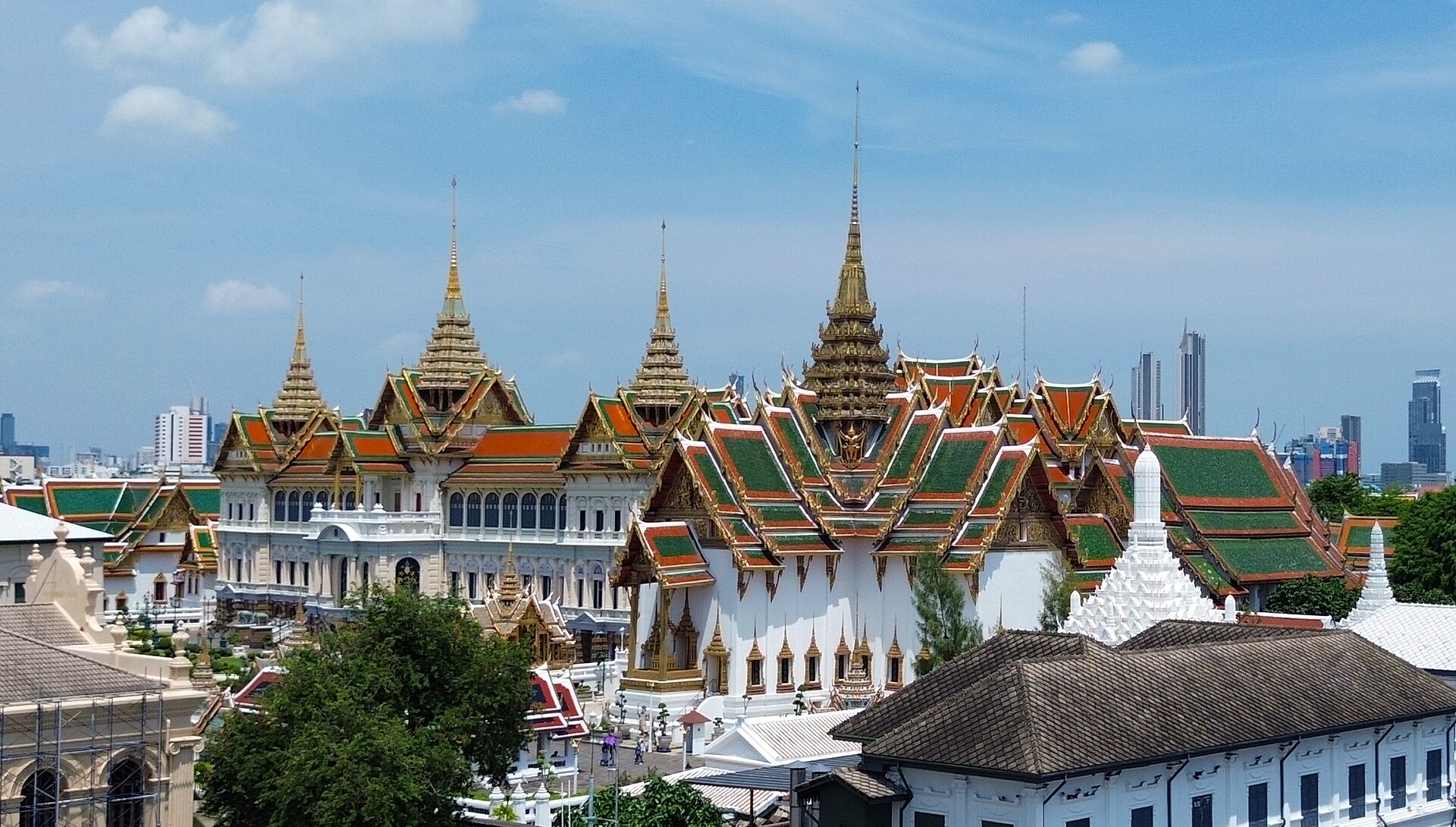
In April 1782 King Rama I crossed the river from Thonburi, drove the City Pillar into the ground, and began digging the canal that turned this bend of the Chao Phraya into an artificial island. Everything the new dynasty needed went inside the moat: the Grand Palace and its royal chapel, the cremation ground at Sanam Luang, the great monasteries, the fortified wall with fourteen forts. The layout copied Ayutthaya deliberately — a capital rebuilt from the memory of the one Burma had burned fifteen years earlier.
The register is densest here of anywhere in Thailand: 141 monuments in Phra Nakhon district alone. Wat Pho holds the 46-metre Reclining Buddha and the marble inscriptions UNESCO lists as Memory of the World; Wat Mahathat has taught vipassana since before the city existed; the Loha Prasat at Wat Ratchanatda raises 37 iron spires on the only building of its kind left anywhere. Of the fourteen forts, two survive — Phra Sumen at the island's northern tip and Mahakan by the Golden Mount.
Walk it early. The palace crowds arrive by nine, but at seven the island still belongs to monks on alms rounds, amulet dealers setting up along Maha Rat Road, and the pigeons of Sanam Luang.