Heritage quarter · ธนบุรี
Kudi Chinกะดีจีน / กุฎีจีน
Portuguese Bangkok since 1770 — six faiths within one kilometre of riverbank.
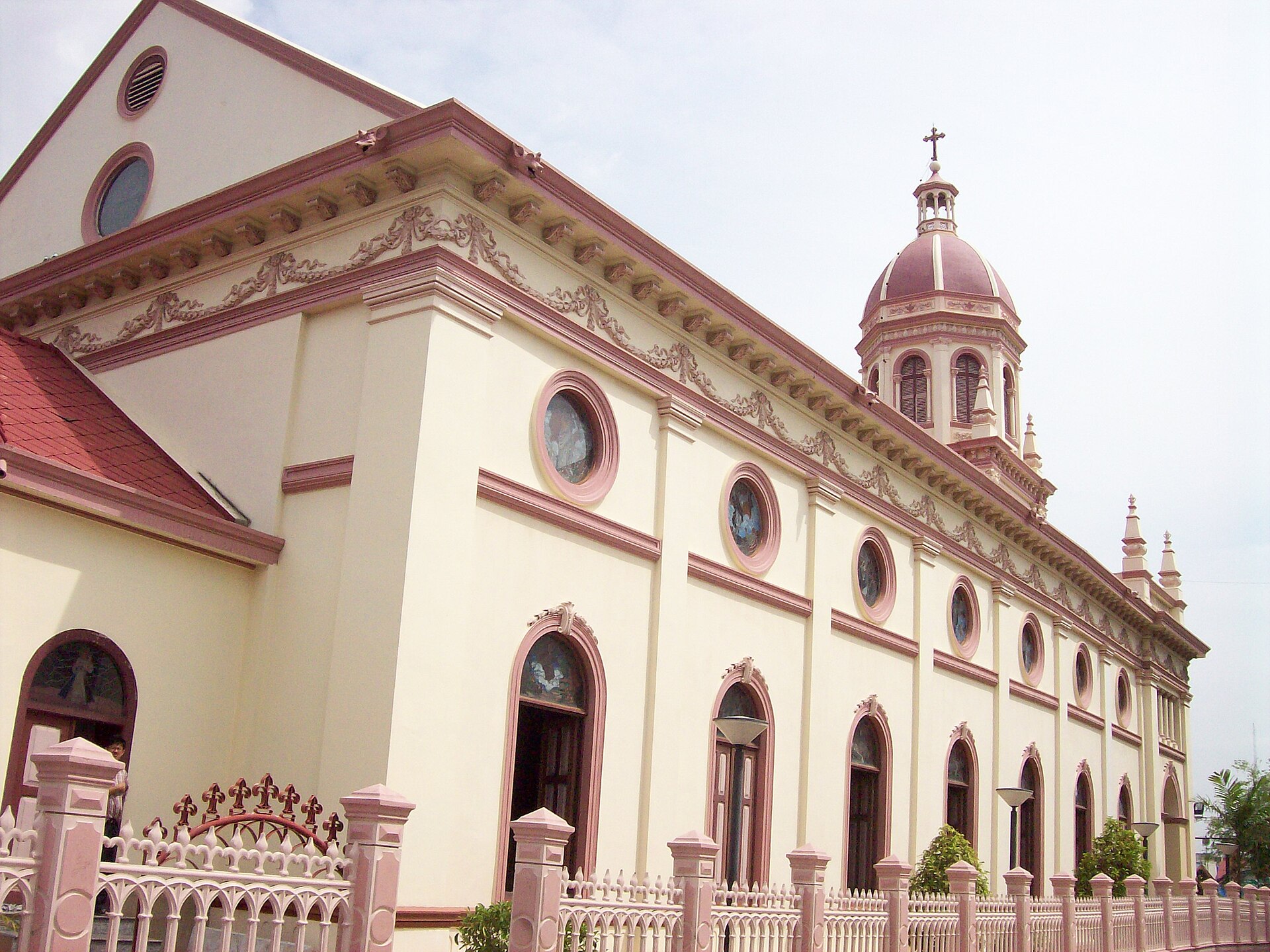
When King Taksin rebuilt the Siamese capital at Thonburi after the fall of Ayutthaya, he granted this stretch of riverbank to the Portuguese who had fought alongside him. They built Santa Cruz church in 1770; the present dome — Rigotti and Tamagno's 1916 building, the third on the site — still anchors a community that has been Catholic, Thai and part-Portuguese for two and a half centuries. The bakeries in the lanes still make khanom farang kudi chin, a dry sponge cake from a 250-year-old Portuguese recipe, over charcoal.
The remarkable thing about Kudi Chin is what stands within a kilometre of the church. Wat Kalayanamit, whose 15-metre seated Buddha fills a viharn built for it in 1837. The Kian Un Keng shrine, where a Hokkien community has kept a Guanyin altar since before the Chakri dynasty. Wat Prayoon with its white mountain-chedi, whose 2013 restoration won UNESCO's top Asia-Pacific conservation award. And Bang Luang Mosque — Kudi Khao, the White Mosque — built by Ayutthaya-descended Muslims in the form of a Thai temple hall, the only mosque of its kind. Buddhist, Catholic, Chinese and Muslim congregations, all still active, all in earshot of each other's bells.
The Baan Kudichin Museum, run by a Portuguese-descended family in their own house, tells the story in three small floors and serves the cake downstairs.